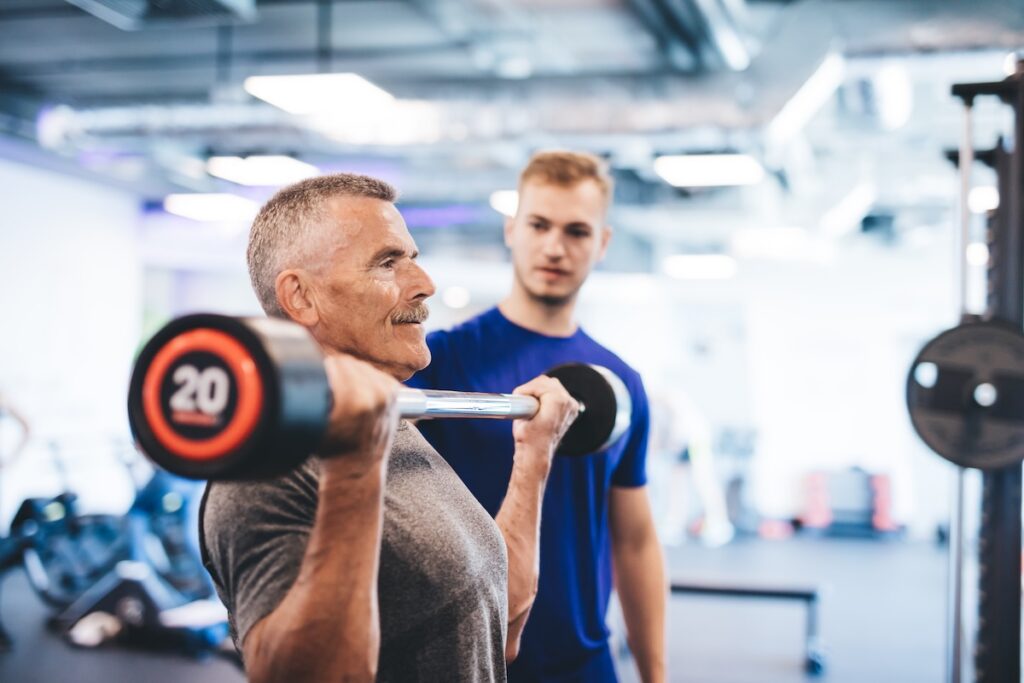
I get more questions about “where to start with strength training” from adults in their fifties and sixties than about any other single topic. People know they need it. Most have read or been told that strength training is the single most protective thing they can do for the next thirty years of their life. They want to get on with it.
And then they walk into a gym, pick up the wrong things, and three weeks later they’re in a doctor’s office with a tweaked low back, asking if maybe they’re too old for this.
You’re not too old. You started wrong.
The five most common starting mistakes
I see these over and over:
- Starting too heavy. The body needs four to six weeks of learning the movement patterns before it’s ready for meaningful load. Almost everyone skips this phase because it feels like nothing is happening.
- Copying programs designed for twenty-year-olds. Most “strength training” content online is built around someone with a twenty-year-old’s recovery capacity. That’s not you, and that’s not me either.
- Six days a week from a cold start. More frequency does not equal faster results past forty. It equals injuries.
- Skipping the warm-up and the cool-down. When you’re younger, you get away with it. After fifty, the joints need preparation and the nervous system needs a transition.
- Doing only what feels comfortable. People avoid the exercises they need most — usually squats, hinges, and presses — and pile up the ones that feel safe and don’t actually move the needle.
What “starting right” actually looks like
The first month should feel almost too easy. That’s not a sign you’re not working hard enough — it’s a sign you’re investing in a foundation that will hold up for the next decade.
A good first-month program usually has:
- Two to three sessions per week, not five or six
- Forty-five to sixty minutes per session, not ninety
- The five fundamental human movement patterns: squat, hinge, push, pull, carry
- Bodyweight or light load on most everything for the first three to four weeks
- A real warm-up — ten minutes of joint preparation and mobility work
- A real cool-down — five minutes of mobility and breathing to bring the nervous system back down
The work isn’t impressive on Instagram. It’s also exactly what produces the people who are still strong, capable, and pain-free at seventy-five.
The math that should reassure you
Strength gains are not linear. You don’t progress slowly forever. The first eight weeks build the platform. After that, the gains compound noticeably — load goes up, recovery improves, the movement patterns become automatic, and you start to feel actually strong rather than just “in the gym.”
Patience in the first two months is what makes the next two decades possible.
The people who push too hard early either get hurt and quit, or get discouraged and quit. The people who go slow and methodical build a body that handles their seventies and eighties with capacity to spare.
Where to start this week
If you’re starting cold and you want one thing to do this week, do this:
Two bodyweight squats, two pushups against a wall or counter if floor pushups aren’t there yet, and a thirty-second carry holding any weighted object. Three times through. Add one rep each day for the rest of the week.
That’s it. That’s the start.
The full program — the one that gets you to seventy-five strong — builds from there. But the start is just showing up, moving the body through the patterns, and letting the work compound.
Book a 15-minute intro if you’d like to talk through a starting plan that fits where you are.
